Over the years, I have used expensive cameras and lenses to create images that are sharp and detailed.
With shutter speeds of a tiny fraction of a second, they give me an instant documentary record of what stands before me. Time is frozen instantly. Recently, I have learnt that with the use of ICM, I can create a whole new feeling in my photographs.
The term “Liminal Photography” arose and caused me to explore its meaning. A search of the internet returned the following information:
“Key Characteristics of Liminal Photography“
- Total Absence of People: The scenes are usually completely empty, or feature only a distant, shadowy silhouette.
- Transitional Geography: They focus on connectors like corridors, doors, bridges, or empty waiting rooms.
- Unnatural or Dim Lighting: Photos are often taken in the twilight, at night, or under buzzing, artificial fluorescent lights.
- Suspended in Time: The setting feels detached from any specific decade or routine.
The Emotional Vibe
Liminal images often trigger a strange mix of opposing feelings:
- Unease and Eeriness: Because these spaces should normally be filled with bustling crowds, their total emptiness feels uncanny, dystopian, or slightly threatening.
- Nostalgia and Comfort: They can also spark a quiet, dreamlike memory of childhood or past places you visited long ago.
In particular, the very last point about nostalgia and comfort struck a chord with me.
There’s no doubt that some people will look upon this impressionistic style of photographic art as being rubbish and move on. I accept that is their view, as it is what most of us have grown up with. I also accept that they haven’t seen what I saw when I took the photograph, and more importantly, my emotional experience at the time of taking the photograph.
Covenants like the rule of thirds, depth of field where everything must be sharp, groups of three, and countless other stereotypical rules in photography somewhat inhibit creativity. In liminal photography, there is room to embrace those rules as guidelines, but they shouldn’t act like shackles on one’s creativity. I have found that being different and exploring the realms of creativity is refreshing.
I have also learnt that before taking a photograph, I need to spend a moment to evaluate my own feelings and emotions about what attracts my attention. Is it the colour, the shape or even the light at the time? I ask myself. I look for the story behind the scene and how I could express it artistically.
A further element, and something that is inherent to ICM (Intentional Camera Movement), comes to the fore, that is the use of the effects of time and movement to impart emotion and feeling into the image. By combining one’s own feelings into the photograph, it is possible to provide the viewer with something different to the norm. Something that will hold their attention as they evaluate and interpret what lies before them.
Tranquility
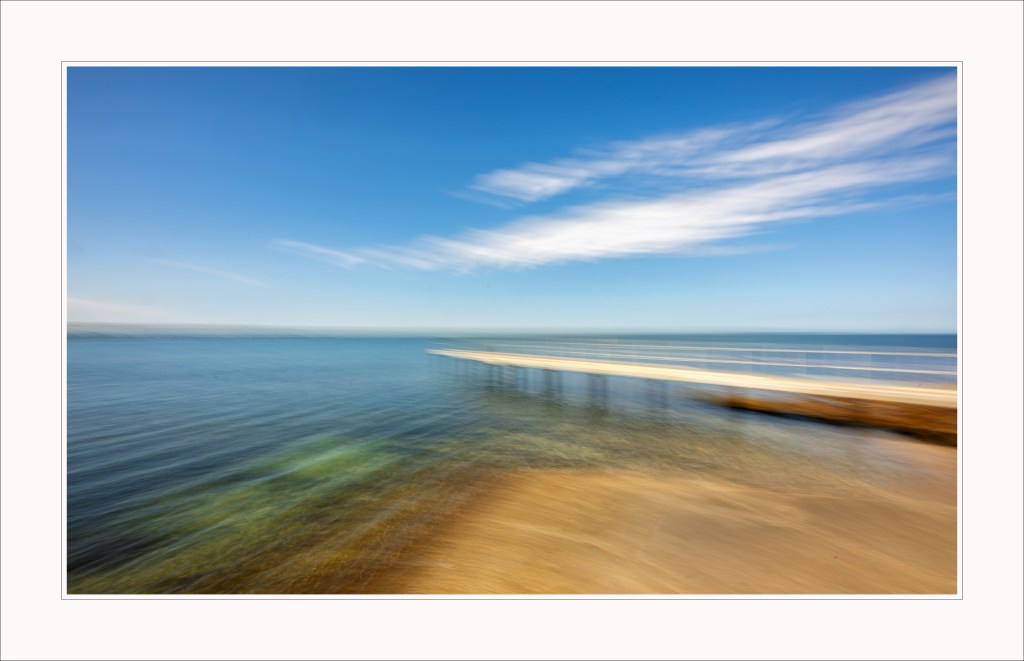
The image below was taken on a warm and sunny day in Bayside, Melbourne. The sky was blue, and the mood was tranquil. My feeling was that Spring had finally arrived, and the gloomy Winter days were now behind us. I also saw a lonely cloud replicating the shape of the jetty in the sky. By using a relatively slow shutter speed of 1.3 seconds and a horizontal pan of the camera, the elongation of the jetty and cloud and the smoothing of the water further enhanced the mood of the image.
Kororoit Creek Jetty Ruins…
The tiny historic fishing village at Kororoit Creek, located 14 km southwest of Melbourne, was built in the 1920’s and now consists of collapsing boat landings and derelict abandoned fishing shacks.
Below is a conventional shot of one of the collapsed boat landings
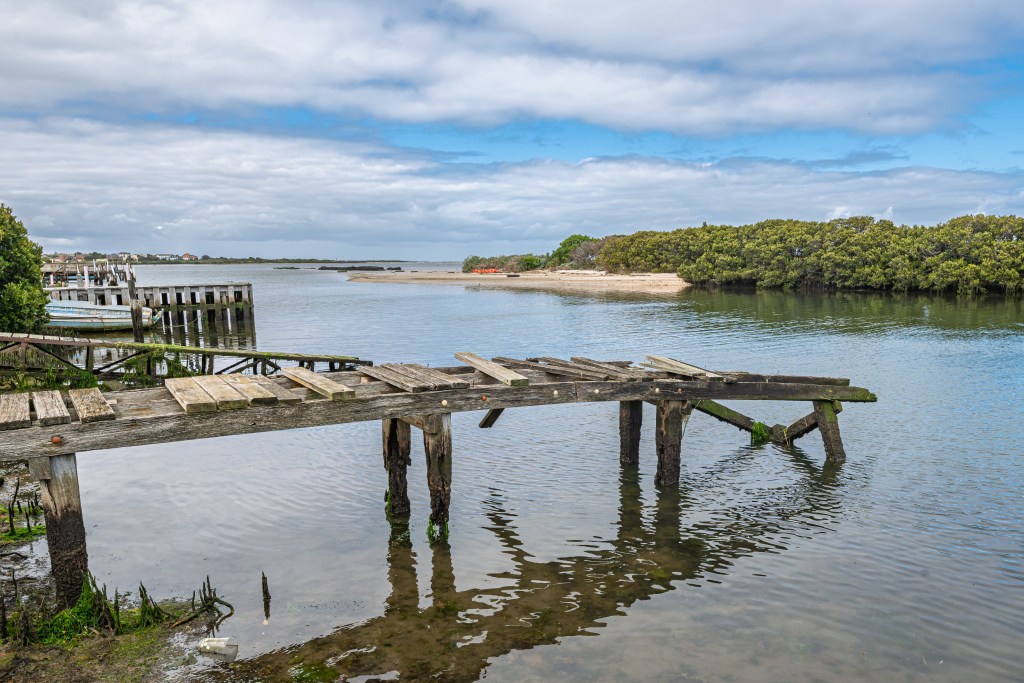
I saw decay and disrepair as I walked around the run-down remains of the village. It was a rather depressing sight; however, the conventional image only shows what I saw in that instant. It doesn’t capture the feelings and emotions that I had at the time.
By the use of ICM, this next image was able to capture the nostalgic mood of the time.
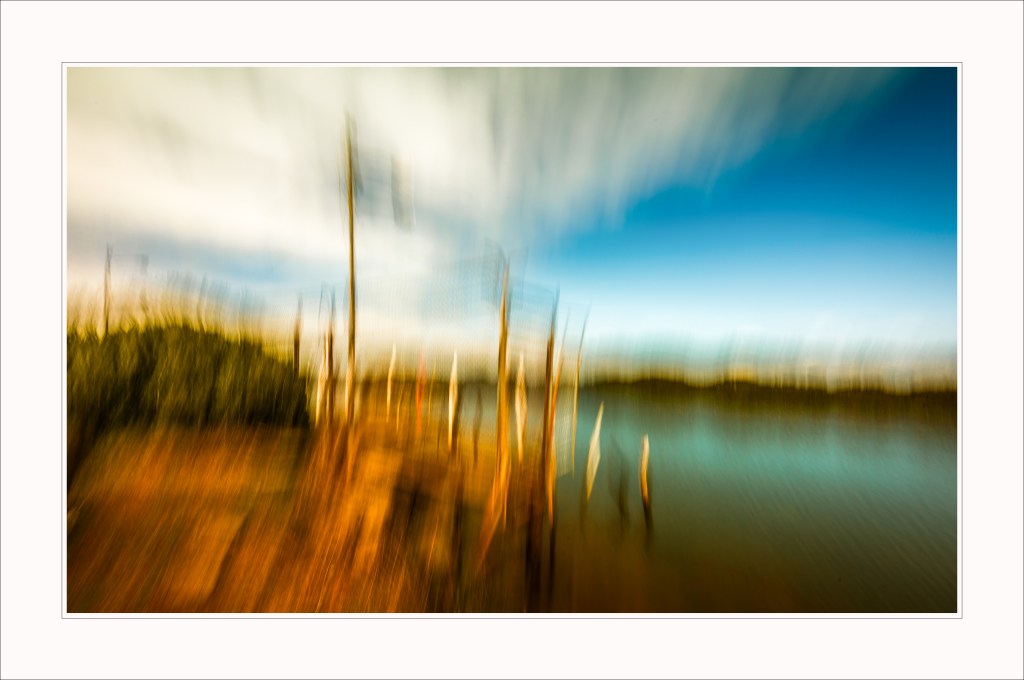
With vertical camera movement, the tall white poles in this shot stand in silence like soldiers as they bow their heads in recognition of the ravages of a century of time and tide. Just a moment in time for me, but a closing chapter of the area’s better days of the past.
The long exposure allowed the camera to record the underlying colours of the creek and its reflections, together with the camera movement, which enhanced the muddy, litter-strewn surroundings into a more pleasing and moody rendition.
All done in camera using ICM and a 1.3-second exposure achieved by using a 6-stop ND filter
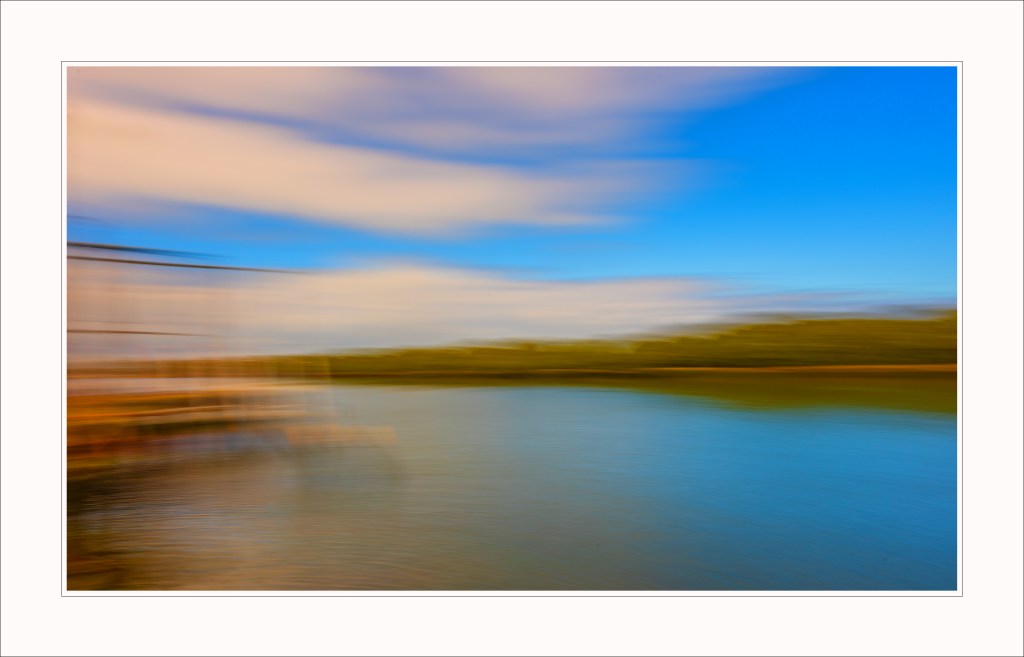
From an environment of chaos to one of beauty, the image below of the little estuary conveys a more peaceful feel. A dreamtime effect, in fact. One of what it would have been like in its heyday, when holidaymakers would come to enjoy the area.
The image “Dreaming” represents my interpretation of the thoughts of an older person reminiscing about their childhood memories of their family visits.
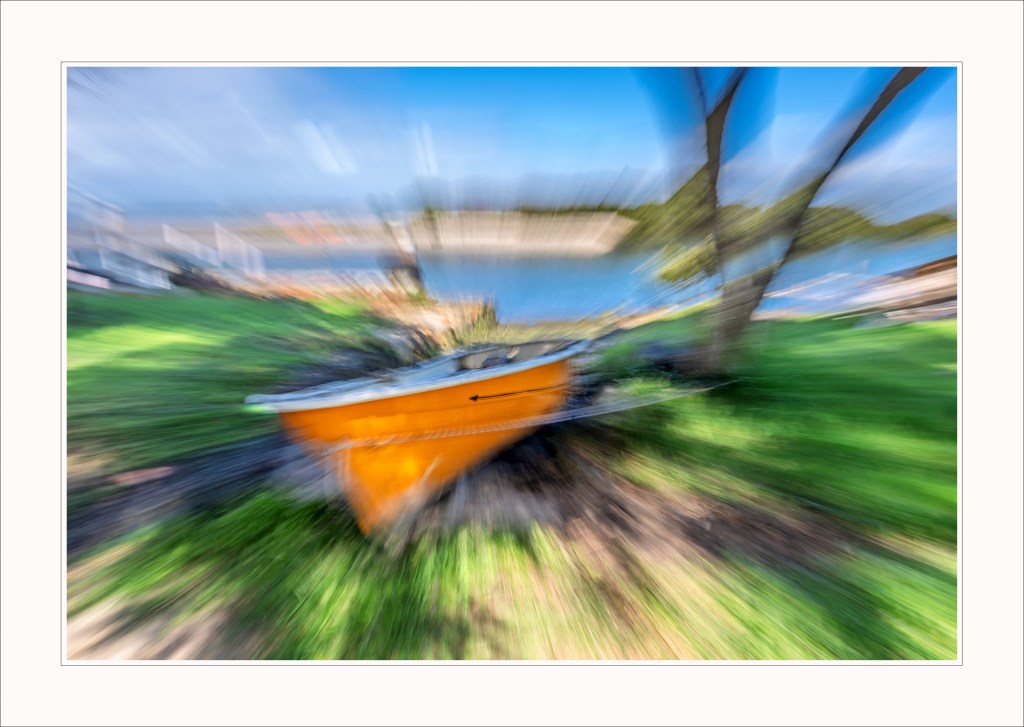
My next image from the area, is titled: Ran Aground
The tiny fishing huts dotted along the creek, now derelict and deserted, would have many tales from the past they could tell.
Here I saw a decaying fishing boat tethered and abandoned by its owner.
The use of ICM with a lens zoom during the 0.6-second exposure led me to imagine a story of an old man who loved fishing.
The little orange boat would have been his sole companion during his many hours at play while catching his hauls over the years.
Finally, at the end of a fateful day, I can imagine he ran his boat aground for the last time as his ageing body called time on their pleasures. Never to return to the sea, the little dinghy weathers the ravages of time to take its course.
I think I may have discovered liminal photography.
Greg

